

Program Information
Science, Educational and Professional Program
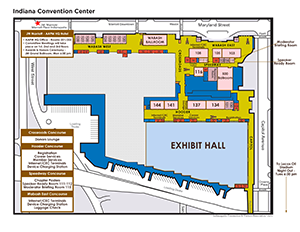
What's Hot!Pocket Program (as PDF)Meeting Program-At-A-Glance (as PDF)Session/Meeting Rooms Map
|
Proferred Sessions
Best in Physics
|
Society Oriented Sessions - Make Plans to Attend
- New Member Symposium
- Society of Directors of Academic Medical Physics Programs (Annual Meeting and Business Meeting)
- Annual Business and Town Hall Meeting
Program Information
New for the 2013 Program:
- Special Ultrasound Symposium (Monday - Tuesday, August 5 - 6)
- Expanded SAMS offerings.
- New session formats, including debates and panel discussions.
- Increased dawn-to-dusk content in scientific and educational tracks.
- Scientific symposia featuring increased interactive content.
- The Professional Track will have a proffered paper session.
The following topics will be offered during the meeting:
Imaging Track
The 2013 Imaging Track explores both near- and far-term directions of medical physics research and innovation. These directions include: Estimating risk for low radiation doses, virtual validation tools for x-ray breast imaging systems, as well as advanced imaging methods for breast cancer. Additional topics include advances in models of image quality, nanotechnology & molecular imaging, and multi modal imaging for therapy response. These sessions will explore the state of the art and also show some of the directions that our scientific envelopes are being pushed towards.
Therapy Track
The 2013 Therapy Track will showcase the current hot topics in therapy with a focus on medical physics research and innovation. Symposia will include thefollowing general topics: accuracy requirements and uncertainties in modern radiation therapy, automation in clinical procedures, intensity modulated proton therapy, novel dose calculation methods, safety processes, and new therapy applicationsbeyond external beam radiotherapy or traditional brachytherapy.
Joint Imaging-Therapy Track
The 2013 Joint Imaging-Therapy Track will feature exciting topics highlighting the collaborative efforts between imaging and therapy medical physics. This track will include the following topics: a lively interactive session on the future of medical physics, the impact of OMICs on medical physics research, MR guidance in radiotherapy, and advanced applications in deformable image registration and proton range uncertainty.
Educational Course - Imaging Track
The Imaging Education Program at the 2013 Annual Meeting has been designed to meet the continuing education needs of physicists at all stages of professional development and this year course content has been balanced to meet both clinical and basic educational objectives of attendees. In addition to 8 hours of SAM session programming there are “back to basics” sessions on advances in instrumentation in digital radiography, CT, and PET/MRI and Informatics courses on the role of informatics in imaging system acceptance and an update on the status of the DICOM structured dose report standard. New also this year is an all-day Imaging Education Symposium on Wednesday entitled “The Management and Reporting of Imaging Procedure Dose”. The strong line-up of Imaging Education course content throughout the annual meeting program culminates with new sessions on Thursday on lens of the eye dosimetry, parallel imaging in MRI, and imaging artifacts in projection radiography. The latter session will be followed by an “Image Clinic” outside the meeting room where attendees can bring their “problem” images for diagnosis by the experts.
Educational Course - Therapy Track
The Therapy Physics CE series will feature a total of 31.5 hours of educational lectures. The emphasis of the program will be on safe and effective use of new technologies addressing the current issues in clinical practice. The program is designed to address the broad educational needs of our membership and will include topics in SRS, SBRT, IGRT, IMRT, VMAT, QA and safety, brachytherapy, electron and proton therapies as well as radiobiology. The program will feature six SAM sessions spanning over the entire meeting program and several new courses including ‘Evaluating benefits and challenges of multi-modality co-registration, " Quality Control of Lung SBRT: Minimizing Uncertainties from Simulation to Treatment,” and "Safety Improvement through Incident Learning". Some highly popular subjects such as Small Field Dosimetry and Electron Therapy will also be available along with new subjects such as Plastic Scintillators and Imaging Needs for Proton Therapy.
New development for the 2013 annual meeting program is two live point and counter point debates for subjects including Proton Therapy versus Heavy Ion Therapy for the Future and Brachytherapy versus External Beam Therapy for Accelerated Partial Breast RT as moderated by none other than Colin Orton. These debates will provide an instructive yet enlightening humor with a unique opportunity for audience participation.
Practical Medical Physics Track
The Practical Medical Physics Track offers presentations of use and interest to the practicing medical physicist. Topics for 2013 include four newly-published AAPM Task Groups reports (two imaging, two therapy); statistics, error analysis, and uncertainty; grantsmanship and funding; treatment planning system management; installing and commissioning new equipment; CT tools and protocols available through AAPM; elements of a highly effective educational session; total quality management; and a continuation of the popular session on contouring guidelines for therapy.
Professional Track
TheProfessional Track continues to grow in depth and breadth to keep our membersabreast of the latest professionally-related developments. Topics this yearcoverboth clinical and research aspects of our profession. Among other topics, to be included inthe track is:PQI, DOT Shipper Training, RSO Refresher Course, ABR Update and Exam Preparation, Practice Guidelines, Economics, Publishing, Radioactive Materials Increased Controls, Practice Guidelines, and the Second AnnualInternational MedicalPhysics Symposium.
Science Council Session
Topic: Multi-Modality Imaging in Radiation Therapy: Planning, Guidance, and Assessment of Treatment Response
The Science Council Session includes proffered abstracts on a topic at the cutting-edge of medical physics research, presented in a special, high-visibility proffered oral session. For the 2013 Annual Meeting, the Scientific Program invites abstract submissions on the application of advanced, combined (two or more) multi-modality imaging for radiation treatment planning, guidance, or assessment of therapy response. Potential image modalities and techniques incorporated at clinical and molecular scales include: structural and physiological kV/MV CT and kV/MV CBCT; structural and biofunctional MR FDG and non-FDG PET-CT, SPECT, ultrasound, and optical imaging; 4D imaging; the use of targeted or nanotechnology contrast agents and radioligands; and novel hardware and software systems for multi-modality image fusion/registration, automated and quantitative image interpretation, and biophysical modeling of treatment and response. Scientific results for both pre-clinical and clinical studies are encouraged, as is the use of molecular imaging techniques combined with clinical imaging modalities.
Competitive abstracts will include the use of two or more imaging modalities in complementary or coupled fashion within or across the processes of radiation treatment planning, guidance, or assessment of therapy response. The coupled use of two or more imaging modalities must be clearly presented and integrated within the scope of work.
Criteria for abstract evaluation include novelty of the combination of image modalities and/or applications, their complementary nature, and level of integration. In addition, the impact and contributions to improved fidelity, quality, efficiency and efficacy of radiation treatment, image-based decision-making, and ultimately, patient response and prognosis will be used in the evaluation.
Innovation in Medical Physics Education
The Education Council of the AAPM is sponsoring a session to honor and publicize Innovation in Medical Physics Education. AAPM members are invited to submit a description of innovative medical physics educational activities for radiology residents, radiation oncology residents, medical physicists, technologists or others. The abstract can be scientific research, novel teaching strategies – team teaching or adult learning efforts, novel educational materials – lectures, websites, or other innovations.
The top six submissions will be invited to present their abstracts at the session during the Annual Meeting in Indianapolis, IN. Each speaker will be allocated 15 minutes. The top presenting abstract will be presented a plaque and a $2,000 prize. The Award for Innovation in Medical Physics Education made possible by a generous bequest of Harold Marcus.
How the Meeting is Organized
The numbering scheme encodes the day, time block, room assignment and talk number in the abstract presentation code. The organization for each day (Monday - Thursday) is shown in the table below. Times and Rooms vary on Sunday and Thursday. For example, on Monday:
MO - C - BRCD - 1
Day of Week (SU - TH) - Time Block (A - G) - Room Assignment - Talk Number
| TIME BLOCK | SESSION ROOMS | |||||||||
|---|---|---|---|---|---|---|---|---|---|---|
| 105 | 137 | 108 | 500 | WAB | 141 | 103 | 134 | 116 | 144 | |
| Block A 8:00 - 8:55 |
A-105 | A-137 | A-108 | A-500 | A-WAB | A-141 | A-103 | A-134 | A-116 | A-144 |
| Block B 9:00 - 9:55 |
B-105 | B-137 | B-108 | B-500 | B-WAB | B-141 | B-103 | B-134 | B-116 | B-144 |
| Break 10:00 – 10:30 | ||||||||||
| Block C 10:30 - 11:25 |
C-105 | C-137 | C-108 | C-500 | C-WAB | C-141 | C-103 | C-134 | C-116 | C-144 |
| Block D 11:30 - 12:30 |
D-105 | D-137 | D-108 | D-500 | D-WAB | D-141 | D-103 | D-134 | D-116 | D-144 |
| Lunch + Visit the Technical Exhibits 12:30 – 2:00 | ||||||||||
| Block E 2:00 - 2:55 |
E-105 | E-137 | E-108 | E-500 | E-WAB | E-141 | E-103 | E-134 | E-116 | E-144 |
| ... and so on. | ||||||||||
The general layout of rooms for various programs is as follows, although there are numerous exceptions throughout the week, so check the program carefully:
- Therapy (Education and Scientific): Rooms 105, 137, 108, and 500 Ballroom (500)
- Imaging (Education and Scientific): Rooms 141, 103, 134, 116, and 144
- Joint Imaging-Therapy: Wabash Ballroom (WAB) and Room 141
- Professional: Rooms 105, 137
- Practical Medical Physics: Room 116
- Ultrasound Special Symposium: Room 144
Items of Note:
- SNAP Oral Sessions. A fast-paced short oral presentation format. Watch for the short oral sessions on Sunday (Time Blocks C and D) and Monday (Time Blocks F and G).
- Young Investigators Symposium. The YIS is on Sunday, 4:00 – 6:00 pm, in 500 Ballroom.
- Best in Physics. The top 15 abstracts from the Therapy, Joint, and Imaging scientific programs are featured in large posters on display in the “BIP” theatres in the Technical Exhibits area. Meet the authors on Sunday, 3:30 – 4:00 pm in the BIP Theatres. The posters will be on display during regular hours of the Technical Exhibits.
- Campus Posters. Campus Posters include a select group of high-scoring posters on a specific theme identified by the Program Directors to be of special interest to attendees of the scientific program. These poster presentations will occur in a specially designated "campus" integrated with the poster presentation area in a format promoting lively discussion and scientific exchange. A Provost will moderate these campuses from 3:00 – 4:00 pm on Sunday during the General Poster Discussion Session.
- President’s Symposium. This symposium runs unparalleled on Monday, 10:30 am – 12:30 pm.
- Science Council Session. This proffered session of abstracts on a topic of special relevance is scheduled for Wednesday, 10:30 am – 12:30 pm, in Wabash Ballroom.
- Innovation in Medical Physics Education Session. This proffered session of abstracts is scheduled for Monday, 4:30 pm – 6:00 pm, in Room 134.
How the Sessions are Defined
Scientific Program
Science Council Session - A topic of particular relevance in medical physics research is identified each year, with proffered submissions on that topic considered for inclusion in this scientific session. The topic selected for the 2013 Science Council Session is: Multi-Modality Imaging in Radiation Therapy: Planning, Guidance, and Assessment of Treatment Response.
Scientific Session - These sessions comprise the bulk of the scientific program, in which the best-scored proffered abstracts are presented in a regular oral presentation format. Each session is on one or several specific scientific topics, with several oral presentations [10 min each (8 min talk + 2 min Q&A)].
Symposium - A symposium is a topical session focusing on a current topic related to pioneering or state-of-the-art research and development of medical physics. The symposia often include multiple speakers, some of them invited, to speak on the topic. Some symposia will include a panel discussion aiming to define the current state of the field and to distill the thinking of the experts.
SNAP Oral Sessions – Similar to regular Scientific Sessions, the SNAP Oral Sessions feature high-scoring proffered abstracts presented in an accelerated presentation format [7 min each (5 min talk + 2 min Q&A)].
Campus Posters - This category includes a select group of high-scoring posters on a specific theme identified by the Program Directors to be of special interest to attendees of the scientific program. These poster presentations will occur in a specially designated "campus" integrated with the poster presentation area in a format promoting lively discussion and scientific exchange. A Provost will moderate these campuses from 3:00 – 4:00 pm on Sunday during the General Poster Discussion Session.
Best in Physics - Poster session will highlight the top five scoring abstracts in the Therapy, Imaging, and Joint Imaging/Therapy Tracks.
General Poster Discussion Session - This category includes proffered abstracts judged to be of high scientific quality and for merit presentation in poster format. Authors will be present during the scheduled session in order to interact with meeting attendees.
Educational Program
Education Council Symposium - This symposium is designed to update our members on the various activities of the Education Council. Emphasis is placed on the resources and programs that are available to enhance the skills of our members as well as resources that are available through the Association to assist our members when presenting programs to related health professionals and the public.
Educational Courses – The Educational Program consists of courses in two major areas: Radiation Oncology Physics (24 sessions) and Diagnostic Imaging Physics (20 lectures).
The Therapy Physics Educational Program will feature basic and advanced courses on the physics of radiation oncology and treatment practices including Small Field Dosimetry, Radiobiological Principles of Fractionated Radiotherapy and the Potential for Hypofractionation, Radiobiological models in brachytherapy planning and evaluation , Volumetric Modulated Arc therapy, Monte Carlo Treatment Planning in RT, Treatment Planning in Proton Therapy, Status of ART in the Clinic, as well as reports on safety and new technology including Safety Improvement through Incident Learning, Solutions for Interconnectivity Issues in Radiation Oncology: Integrating the Healthcare Enterprise-Radiation Oncology (IHE-RO), and A Report on Flattening Filter Free C-arm Linear Accelerators from the Therapy Emerging Technology Assessment Work Group . The goal is to promote a more balanced learning experience for all levels of participants from trainees to more experienced physicists.
This year the educational program will feature SAMs throughout the entire week so that attendees can take advantage of a full-week program. SAM sessions will cover a full range of interests including Future of Radiation Therapy Safety, Deformable Image Registration, Contour Propagation and Dose Mapping: 101 and 201, Evaluating Benefits and Challenges of Multi-modality co-registration, Quality Control of Lung SBRT: Minimizing Uncertainties from Simulation to Treatment, and Electron Radiotherapy, Past, Present, and Future. Topics on implementation of new technology will cover subjects on Clinical Applications of Surface Imaging, High Energy Brachytherapy dosimetry as it applies to Accelerated Partial Breast Irradiation (APBI), Plastic Scintillation Detectors: Present Status and their Application for Quality Assurance and in Vivo Dosimetry, Imaging Needs for Proton Therapy.
Finally, the highlight of the program will be two live debates: The More Important Heavy Charged Particle Radiotherapy of the Future Is More Likely to Be with Heavy Ions Rather than Protons, and Brachytherapy is better than external beam therapy for partial breast irradiation.
The Imaging Education Program has been designed to meet both clinical and basic educational objectives of attendees, with a variety of topics that will appeal to medical physicists at various stages of professional development. Course topics include: advances in instrumentation in various modalities including PET/MRI, CT and DR, the role of informatics in imaging system acceptance and an update on the status of the DICOM structured dose report standard. The Imaging Education program also includes new sessions on lens of the eye dosimetry, parallel imaging in MRI, breast imaging QA in MRI and tomosynthesis, and identification and remediation of imaging artifacts in projection radiography. A further highlight of the program is an all-day Imaging Education Symposium entitled “The Management and Reporting of Imaging Procedure Dose” which will deal with the topic of dose management in different imaging modalities and also discuss administrative approaches from the local, regional and international perspective.
Lastly and most importantly for physicists seeking SAM continuing education credits there will be 8 hours of SAM courses on the following topics:
- Management and safe release of radioactive patients in nuclear medicine,
- An update on vendor-recommended QC tests in mammography
- Stereotactic breast imaging system QC
- Various approaches to homogeneity and RF coil testing in MRI
- Technologist QC in MRI
- Ultrasound QC and accreditation
- An update on the work of the AAPM Working Group on Quantitative B-mode Ultrasound
- Ultrasound QA software for analysis of transducer condition
- Rapid Periodic QA of Gray-scale Ultrasound Scanners using phantoms and automation software
Professional Program
Professional Council Symposium – This Symposium is focused on current topics that involve the professional practice of medical physics. Subjects may range over all aspects of practice such as legal issues, government affairs, research and clinical funding, economics, practice management, peer relations, standards and guidance and ethics.
Professional Courses - will be held for specific purposes that require multi-hour programs such as government mandated training and education, time intensive professional issues, or programs that involve attendee participation.
Practical Medical Physics Program
The Practical Medical Physics Track focuses on the activities of the clinical medical physicist. Twelve courses covering practical aspects of therapy, diagnostic, and nuclear medicine physics are offered this year. A highlight of this year's program will be an overview of statistics, error analysis, and uncertainty reporting. We'll go beyond TG-43 for implementation of advanced brachytherapy dose calculation algorithms. There will be sessions covering strategies for total quality, MRI safety, and managing a treatment planning system. Guidelines for installing and commissioning new equipment will be presented, as well as a summary of CT tools and protocols available through AAPM. Two new task group reports, TG151 on radiographic systems quality control and TG132 on image registration and fusion, will be discussed. The popular practical contouring tips course will be repeated, this time addressing CNS and cardiac/thoracic. Rounding out the program will be one session aimed at creating an effective education session and another covering grantsmanship and funding.
Ultrasound Special Program
A special symposium running Monday – Tuesday focusing on the science and education of medical ultrasound – emphasizing ultrasound image guidance of radiotherapy and advances in therapeutic ultrasound. The symposium includes invited speakers and proffered abstracts, and an educational workshop.
Note: Presentation Identifiers
* - Where indicated, denotes Presenting Author
Special Recognitions & Acknowledgements
Best in Physics
Innovations in Medical Physics Education Symposium
The Education Council of the AAPM is sponsoring a session to honor and publicize innovation in Medical Physics Education. AAPM members were invited to submit a description of innovative medical physics educational activities for radiology residents, radiation oncology residents, medical physicists, technologists or others.
The top six submissions have been invited to present their abstracts at the Innovation in Medical Physics Education Session on Monday, August 5 from 4:30 pm – 6:00 pm in Room 134 of the Convention Center.
The top presenting abstract will be presented a plaque and a $2,000 prize. The Award for Innovations in Medical Physics Education made possible by a generous bequest of Harold Marcus.
The winner will be announced during the AAPM Awards and Honors Ceremony Monday, August 5 from 6:30 pm - 8:00 pm in Grand Ballroom in the J.W. Marriott.
| Innovations in Medical Physics Education Symposium | |
|---|---|
| TIME/TALK NUMBER | PRESENTATION |
4:30 PM MO-F-134-1 |
The Desktop Magnet: Simulation/tutoral Software for MRI Education - D. Gauntt* |
4:45 PM MO-F-134-2 |
Project-Based Learning - Expanding Course Content with a Broad-Scope Project - R. Howell*, S. Kry, U. Titt |
5:00 PM MO-F-134-3 |
Designing a Low Cost Digital Imaging System for Medical Physics Education - C. Brown*, J. Polf |
5:15 PM MO-F-134-4 |
Access for Minorities to Physics Education & Research Excellence (AMPERE) - W. Ngwa* |
5:30 PM MO-F-134-5 |
Physics Education to Enhance CT Image Quality Optimization and Dose Management: Model, Method, and Materials - P. Sprawls* |
5:45 PM MO-F-134-6 |
Innovative Approach Towards a Paperless Physics Residency Management System - L. Schubert*, M. Miften |
The John R. Cameron Young Investigators Symposium Competition Finalists
Each year the AAPM conducts a Young Investigators' Competition for the Annual Meeting. Young Investigators were encouraged to submit abstracts for the competition. The 10 highest scored Young Investigator submissions determined by abstract reviewers are selected to be presented in a special symposium, in honor of University of Wisconsin Professor Emeritus John R. Cameron, Ph.D.
Young Investigators Symposium will be held Sunday, August 4, (4:00 - 6:00) in 500 Ballroom of the Convention Center.
The top 3 winners will be recognized during the AAPM Awards and Honors Ceremony Monday, August 5 from 6:30 pm - 8:00 pm in the Grand Ballroom in the J. W. Marriott. The Awards Ceremony to be followed by a reception from 8:00 pm – 9:00 pm.
Jack Fowler Junior Investigator Competition Winner
An award for Junior Investigators has been established in honor of Dr. Jack Fowler, Emeritus Professor of Human Oncology and Medical Physics, University of Wisconsin.
Junior Investigators were encouraged to submit abstracts for the competition. The top scoring Junior Investigator submission determined by abstract reviewers was selected.
The winner will be announced during the AAPM Awards and Honors Ceremony Monday, August 5 from 6:30 pm - 8:00 pm in the Grand Ballroom in the J.W. Marriott.
| Competition Winner | ||
|---|---|---|
| SESSION | TIME/TALK NUMBER | PRESENTATION |
| WE-C-108 Dose Calculations |
10:30 AM/WE-C-108-1 | Towards Radiation Therapy with Very High-Energy Electron Beams - M Bazalova*, B Hardemark, E Hynning, M Dunning, D McCormick, M Liu, S Tantawi, A Dolgashev, A Koong, P Maxim, B Loo |
Acknowledgements
The AAPM appreciates the contributions of the following individuals for their involvement in the development and success of the 2013 AAPM Meeting Program.
EDCATIONAL, PROFESSIONAL, PRACTICAL MEDICAL PHYSICS COURSES and SYMPOSIA ORGANIZERS
H. Al-Hallaq, J. Antolak, D. Bakalyar, P. Bakic, J. Balter, S. Becker, S. Beddar, S. Benedict, T. Bichay, S. Bowen, K. Brock, M. Chan, J. Chang, Z. Chen, I. Chetty, D. Christensen, D. Cody, O. Craciunescu, I. Das, J. Deasy, J. Deye, S. Dieterich, E. Ebbini, L. Fairobent, K. Farahani, E. Ford, D. Frey, M. Giger, E. Gingold, J. Goodwin, M. Gossman, F. Guo, P. Halvorsen, A. Hananel, M. Hatt, J. Hazle, W. Hendee, Y. Hu, D. Jaffray, X. Jia , A.K. Jones, D. Jordan, R. Kapoor, S.C. Kappadath, J. Keener, M. Kessler, R. Keyes, J. Kruse, S. Kry, C. Lafon, S. Larson, X.A. Li, D. Low, Z.F. Lu, C. Ma, L. MacDonald, A. Molineu , E. Moros, F. Mourtada, K. Myers, R. Nishikawa, J. Och, J. Och, C. Orton, H. Pagenetti, D. Peck, D. Pfeiffer, Y. Pipman, J. Pouliot, N. Ranger, M. Rehani, S. Richardson, M. Rivard, L. Rothenberg, S. Sammet, D. Schlesinger, R. Schulte, J.A. Seibert, D. Shepard, J. Siewerdsen, J. Siewerdsen, P. Slattery, J.C. Smith, P. Sprawls, T. Stanescu, R. Tarver, J. Van Dyk, A. Walz-Flannigan, J. Wong, R. Wu, L. Xing, F.-F. Yin, X. Zhang
ABSTRACT REVIEWERS
W. Abdel-Rahman, J. Adamovics, J. Adamson, N. Agazaryan, S. Ahmad, A. Ahnesjo, H. Al-Hallaq, P. Alaei, A. Alessio, M. Alshanqity, A. Altman, H. Amols, M. Andre, K. Andriole, W. Ansbacher, J. Antolak, L. Archambault, S. Armato, B. Arnold, S. Avery, B. Aydogan, A. Badal, D. Bakalyar, M. Bakhtiari, P. Bakic, P. Balter, L. Beaulieu, R. Behrman, R. Bell, C. Beltran, E. Bender, S. Benedict, R. Berbeco, C. Bloch, W. Bolch, E. Boote, T. Bortfeld, S. Both, J.D. Bourland, S. Brady, S. Breen, K. Brock, K. Brown, S. Brown, C. Burman, J. Burmeister, W. Butler, J. Cai, Y. Cao, D. Carlson, C. Cavedon, K. Chakrabarti, H.-P. Chan, M. Chan, J. Chang, S. Chang, Z. Chang, E. Chao, G. Chen, H. Chen, L. Chen, M. Chen, Q. Chen, T. Chen, Y. Chen, Z. Chen, K.-H. Cheong, I. Chetty, S. Cho, S. Cho, Y.-B. Cho, J. Chu, G. Clarke, J. Clements, D. Cody, G. Compagnone, C. Coolens, A. Corrao, L. Court, O. Craciunescu, I. Cunningham, B. Curran, W. D'Souza, M. Dahlbom, M. Danielsson, I. Das, L. Dauer, H. De las Heras, C. De Wagter, J. Deasy, J. DeMarco, L. DeWerd, C. Diederich, S. Dieterich, G. Ding, T. Djemil, J. Dobbins, L. Dong, K. Doxsee, P. Dunscombe, I. El Naqa, W. Erwin, C. Esquivel, P. Esser, J. Esthappan, G. Ezzell, B. Faddegon, R. Fahrig, K. Farahani, J. Farr, W. Feng, Y. Feng, A. Fenster, V. Feygelman, J. Flanz, T. Flohr, M. Flynn, R. Flynn, A. Fogliata-Cozzi, D. Followill, J. Fontenot, E. Ford, R. Foster, J.B. Fowlkes, M. Fox, T. Fox, B. Fraass, T. Funk, E. Furhang, K. Ganezer, A. Ganguly, S. Gao, J. Garcia Ramirez, O. Gayou, W. Geiser, J. Geleijns, J. Gibbons, M. Giger, J. Gilio, D. Gilley, M. Gillin, E. Gingold, S. Glick, S. Goddu, J. Goodwin, J. Gordon, R. Gould, D. Granero, E. Graves, M. Guerrero, S. Hadley, P. Halvorsen, R. Hammoud, J. Harper, M. Herman, J. Hiatt, D. Hintenlang, L. Hong, R. Howell, R. Howell, D. Hristov, J. Hsieh, A. Hsu, Y. Hu, Z. Huang, G. Hugo, S. Hui, J. Humm, M. Hunt, M. S. Huq, C. Hurkmans, G. Ibbott, E. Izaguirre, E. Jackson, D. Jaffray, S. Jani, K. Jee, R. Jeraj, X. Jia, S. Jiang, Y. Jiang, J.-Y. Jin, A. Jones, P. Judy, M. Kachelriess, G. Kagadis, A. Karellas, P. Keall, H. Keller, M. Kessler, G. Kim, J. Kim, J. Kim, L. Kim, P. Kinahan, M. King, C. Kirisits, C. Kirkby, E. Klein, C. Knill, T. Knoos, J. Kofler, E. Krupinski, J. Kruse, S. Kry, R. Kudchadker, J. Lagendijk, J. Lamb, T. Lee, S. Leng, B. Li, H. Li, J. Li, J. Li, S. Li, W. Li, X. Li, J. Lian, J. Liang, J. Liang, B. Libby, J. Limmer, H. Lin, L. Lin, D. Litzenberg, B. Liu, C. Liu, T. Liu, W. Liu, W. Liu, Y. Liu, T. LoSasso, D. Low, W. Lu, W. Lu, Z. Lu, C.-M. Ma, J. Ma, L. MacDonald, T. Mackie, M. MacPherson, G. Mageras, M. Mahesh, A. Markovic, M. Martel, J. Masten, M. Masterson-McGary, R. Mather, K. Matthews, M. Matuszak, P. Mavroidis, O. Mawlawi, C. Mayo, B. McClean, S. McCullough, B. McCurdy, P. McDermott, M. McEwen, J. McGary, M. McKee, M. McNitt-Gray, A. McNiven, T. McNutt, J. Mechalakos, S. Meeks, A. Meigooni, M. Meltsner, J. Meyer, T. Mian, M. Miften, D. Mihailidis, B. Mijnheer, M. Miller, C. Mistretta, M. Mitch, S. Molloi, V. Montemayor, K. Moore, J. Moran, O. Morin, E. Moros, F. Mourtada, M. Moyers, S. Mutic, M. Nakamura, D. Nazareth, C. Newcomb, A. Niemierko, R. Nishikawa, F. Nuesslin, T. Nurushev, M. O'Connor, M. Oldham, C. Orton, Z. Ouhib, N. Ozturk, M. Pacella, H. Paganetti, B. Paliwal, H. Palmans, J. Palta, T. Pan, X. Pan, N. Papanikolaou, P. Parikh, M.-A. Park, S. Park, S. Park, S. Park, B. Parker, K. Parodi, E. Parsai, B. Patyal, W. Pavlicek, T. Pawlicki, D. Peck, C. Pelizzari, S. Pella, J. Perl, P. Petti, D. Pfeiffer, M. Phillips, D. Pickens, S. Pistorius, T. Podder, F. Poenisch, B. Pogue, J. Pouliot, R. Price, R. Price, A. Pugachev, A. Rahmim, C. Ramsey, F. Ranallo, S. Rathee, D. Reeve, C. Reft, M. Rehani, J. Reiff, N. Remmes, L. Ren, S. Richard, S. Richardson, M. Rivard, P. Roberson, D. Roberts, D. Robinson, J. Roeske, M. Rosu, L. Rothenberg, D. Ruan, S. Rudin, M. Rzeszotarski, J. Sabol, N. Sahoo, M. Salehpour, O. Sauer, D. Sawkey, D. Scanderbeg, S. Schafer, M. Schell, D. Schlesinger, T. Schmidt, C. Schmidtlein, J. Schmitt, D. Schofield, E. Schreibmann, B. Schueler, R. Schulte, J. Seco, C. Sehgal, J.A. Seibert, W. Sensakovic, C. Serago, G. Sgouros, G. Sharp, M. Sharpe, S. J. Shepard, G. Sherouse, C. Shi, J. Siebers, J. Siewerdsen, R. Siochi, C. Skourou, R. Sloboda, A. Smith, W. Smith, M. Snyder, J. Soen, J. Sohn, T. Solberg, W. Song, M. Soukup, P. Sprawls, J. St. Germain, R.J. Stafford, J. Star-Lack, G. Starkschall, S. Stathakis, R. Staton, J. Stayman, S. Steciw, R. Stern, R. Stewart, M. Studenski, K. Stump, Z. Su, T.-S. Suh, O. Suleiman, M. Sun, M. Supanich, S. Sutlief, Y. Takahashi, X. Tang, X. Tang, R. Tarver, M. Taylor, R. Teboh Forbang, R. Ten Haken, J. Ting, D. Todor, W. Tome, R. Tosh, A. Trofimov, E. Tryggestad, B. Tsui, J. Turian, N. Tyagi, K. Ulin, F. Van den Heuvel, J. Van Dyk, K. Vanek, T. Varghese, S. Vedam, S. Vedantham, D. Visvikis, B. Wang, J. Wang, L. Wang, S. Wang, Z. Wang, B. Warkentin, R. Wendt, D. Westerly, D. Wiant, R. Wiersma, K. Wijesooriya, L. Williams, C. Willis, T. Willoughby, B. Winey, J. Wong, A. Wroe, Q.-R. Wu, Q. Wu, R. Wu, C.-S. Wuu, P. Xia, Y. Xiao, L. Xing, Q. Xu, X. G. Xu, D. Yan, N. Yanasak, D. Yang, J. Yang, K. Yang, R. Yao, W. Yao, K. Yenice, I. Yeo, M. Yester, B.-Y. Yi, F.-F. Yin, M. Yoon, E. Yorke, C. Yu, L. Yu, Y. Yu, N. Yue, M. Zaider, H. Zaidi, W. Zbijewski, O. Zeidan, D. Zhang, G. Zhang, H. Zhang, J. Zhang, L. Zhang, M. Zhang, Q. Zhang, T. Zhang, X. Zhang, Y. Zhang, W. Zhao, Y. Zheng, L. Zhu, T. Zhu, X. R. Zhu, X. Zhu
MODERATORS
H. Al-Hallaq, E. Angel, S. Avery, D. Bakalyar, P. Bakic, J. Balter, M. Bazalova, L. Beaulieu, S. Becker, S. Beddar, E. Bender, S. Benedict, R. Berbeco, K. Boedeker, J. Boone, T. Bortfeld, J.D. Bourland, S. Bowen, S. Brady, K. Brock, Y. Cao, P. Carson, L. Cervino, M. Chan, J. Chang, G.-H. Chen, Z. Chen, I. Chetty, S.H. Cho, D. Christensen, D. Cody, R. Cormack, L.E. Court, I. Cunningham, W. D'Souza, I. Das, S. Das, J. Deasy, L. DeWerd, J. Deye, S. Dieterich, G. Ding, J. Dobbins, L. Dong, E. Ebbini, I. El Naqa, J. Esthappan, R. Fahrig, L. Fairobent, B. G. Fallone, K. Farahani, J. Fontenot, B. Fraass, G. D. Frey, W.R. Geiser, M. Giger, E. Gingold, C. Glide-Hurst, M. Goodsitt, J. Goodwin, M. Gossman, F. Guo, S. Hadley, P. Halvorsen, R. Hammoud, S. Han-Oh, A. Hananel, M. Hatt, D. Hawkes, J. Hazle, W. Hendee, M. Herman, J. Hsieh, J. Humm, D. Jaffray, X. Jia, X. Jia, S. Jiang, J. Johnson, A. Jones, D. Jordan, S.C. Kappadath, A. Karellas, P. Keall, J. Keener, R. Keyes, P. Kinahan, N. Kirby, J. Kruse, S. Kry, C. Lafon, S. Larson, J. Li, X. A. Li, P. Lindsay, D. Low, D. Low, Z. Lu, C.M. Ma, J. Ma, L. MacDonald, G. Mageras, M. Martel, M. Matuszak, O. Mawlawi, C. McCollough, M. McEwen, M. McNitt-Gray, T. McNutt, M. Miften, R. Mohan, E. Mok, A. Molineu, V. Montemayor, K. Moore, J. Moran, E. Moros, F. Mourtada, M. Murphy, S. Mutic, K. Myers, R. Nishikawa, J. Och, M. Oldham, H. Paganetti, J. Palta, T. Pan, X. Pan, N. Papanikolaou, T. Pawlicki, D. Peck, N. Pelc, C. Pelizzari, D. Pfeiffer, D. Pickens, Y. Pipman, E. Podgorsak, B. Pogue, J. Pouliot, J. Prisciandaro, N. Ranger, N. Ranger, M. Rehani, S. Richardson, S. Robertson, L. Rothenberg, B. Salter, S. Samant, S. Sammet, D. Schlesinger, L.J. Schreiner, R. Schulte, I. Sechopoulos, J. A. Seibert, G. Sharp, M. Sharpe, C. Shaw, J. Siebers, J. Siewerdsen, M. Silver, P. Slattery, J. C Smith, P. Sprawls, R. J. Stafford, T. Stanescu, M. Supanich, X. Tang, R. Tarver, R. Ten Haken, J. Van Dyk, A. Walz-Flannigan, L. Wang, J. Wong, Q.-R. Wu, R. Wu, Y. Xiao, L. Xing, D. Yan, D. Yang, J. Yang, F.-F. Yin, C. Yu, L. Yu, J. Zagzebski, X. Zhang
INVITED SPEAKERS AND PARTICIPANTS
H. Aerts, A. Ahnesjo, H. Al-Hallaq, J. Allison, P. Almond, A. Altman, J. Antolak, K. Applegate, G. Arbique, D. Bakalyar, P. Bakic, F. Ballester, F. Ballester, J. Balter, S. Balter, J. Bayouth, L. Beaulieu, S. Becker, S. Beddar, S. Beddar, R. Behling, S. Benedict, S. Benedict, S. Bentzen, T. Bichay, B. Blankenship, F. Bochud, W. Bolch, J. Boone, T. Bortfeld, J. Bradley, D. Breckenridge, K. Brock, D. Brown, J. Cai, E. Calabrese, Y. Cao, D. Carlson, A. Carlsson Tedgren, M. Carol, C. Catana, L. Cervino, M. Chan, J. Chang, S. Chang, G.-H. Chen, R. Chen, Z. Chen, I. Chetty, K. Cheung, J. Chino, D. Christensen, J. Clements, D. Clunie, D. Cody, R. Cormack, O. Craciunescu, J. Cui, J. A. Cunha, I. Cunningham, B. Curran, J. Cygler, J. Damilakis, I. Das, J. K. De Wyngaert, J. Deasy, J. Deye, A. Dicker, S. Dieterich, L. Dong, N. Doshi, E. Ebbini, G. Ezzell, F. Fahey, B. Fahimian, L. Fairobent, B. G. Fallone, M. Feng, W. Feng, K. Ferrara, C. Flannery, D. Followill, D. Fontanarosa, D. Fontenla, J. Fontenot, E. Ford, G. D. Frey, W. Geiser, W. Geiser, O. Gevaert, M. Giger, F. Goerner, J. Goodwin, M. Goske, R. Griffin, X. Gu, C. Guha, F. Guo, A. Hananel, S. Hancock, N. Hangiandreou, M. Hatt, D. Hawkes, J. Hazle, W. Hendee, J. Hevezi, E. Hipp, S. Hissoiny, K. Hogstrom, C. Holland, H. Hricak, D. Hristov, I.-C. Hsu, Y. Hu, K. Huff, K. Hulme, M. S. Huq, M. Hurwitz, G. Ibbott, D. Jacobson, O. Jaekel, D. Jaffray, R. Jeraj, G. Jia, X. Jia, Y. Jiang, J.-Y. Jin, A. Jones, D. Jordan, M. Kahn, R. Kapoor, A. Karellas, M. Kessler, R. Keyes, N. Kiarashi, P. Kinahan, J. Knisely, H. Kooy, J. Kruse, S. Kry, C. Lafon, P. Lambin, S. Larson, S. Leng, X. A. Li, B. Libby, E. Lief, A. Lomax, D. Low, L. MacDonald, T. Mackie, E. Madsen, L. Marks, C. Martel, M. Martin, D. Mast, J. Masten, C. Mayo, N. Mayr, S. McGuire, T. McNutt, A. Meghzifene, R. Miller, M. Mills, M. Milosevic, V. Moiseenko, C. Moonen, K. Moore, J. Moran, R. Morin, F. Mourtada, M. Murphy, S. Mutic, K. Myers, E. Neufeld, G. Newman, R. Nishikawa, M. O'Connor, K. O'Donnell, M. O'Shea, J. Olsen, C. Orton, H. Paganetti, R. Parker, R. Parker, K. Parodi, E. Paulson, T. Pawlicki, D. Peck, T. Piotrowski, Y. Pipman, B. Pogue, J. Polf, R. Popple, J. Pouliot, G. Pratx, J. Prisciandaro, T. Purdie, B. Raaymakers, F. Ranallo, D. Reeve, M. Rehani, I. Reiser, S. Richardson, V. Rieke, E. Roelofs, D.W. Rogers, E. Romeijn, D. Ruan, B. Salter, S. Sammet, N. Sanghvi, L. Santanam, O. Sauer, C. Saw, D. Schlesinger, R. Schulte, J. A. Seibert, L. Shao, D. Shepard, G. Sherouse, J. Siewerdsen, P. Slattery, A. Smith, W. Smith, J.-J. Sonke, P. Sprawls, G. Starkschall, J. Stayman, R. Stewart, M. Supanich, R. Tarver, B. Thomadsen, R. Thomson, D. Todor, A. Toledano, J. Van Dyk, J. Vassileva, S. Vedam, W. Verbakel, A. Walz-Flannigan, J. Weiser, R. Wendt, G. White, J. White, S. White, K. Wijesooriya, B. Winey, J. Wong, Q.-R. Wu, Y. Xiao, L. Xing, D. Yan, N. Yanasak, J. Yang, T. Yankeelov, M. Yester, F.-F. Yin, J. Yorkston, R. Zeng, D. Zhang, X. Zhang